I knew when I wanted to buy goats and create a sustainable life, I’d need to learn some things before I just jumped in. For anyone who thought I threw myself wholeheartedly into goats, they’d be right. But whoever thought I did it without forethought – well – they’d be wrong.
That’s not to say I did it all perfectly. I still don’t do it all correctly, and nowhere close to perfection. But at the bare minimum, some amount of research and planning should precede buying a goat. Because first off, you can’t buy just one goat.
A general amount of thought should go into the purchase of any major thing, whether that’s the brand of lawn mower you use, the home you purchase, or the pet you rescue from the shelter. A farm is not an impulse buy.
Okay, maybe it was a little. A tiny bit. From the outside looking in, it did all seem to happen quickly. Some people have commented to me that we picked up our life in a whirlwind and moved. In a way, yes, but just because it all happened fast once the wheels were in motion, doesn’t mean it was entirely impulsive.
Our move to the country and starting a farm was both impulsive and perfectly timed. Isn’t that just like God to seemingly make you wait and wait and wait? You wonder if you’re ever going to get to where you want to be as you round that stinking mountain once more, but then once it’s time to make a move, you feel both relieved that it’s finally happening and awestruck that it’s happening at all. That just kind of seems to be my experience when it comes to God’s timing in my life. It never seems like it gets here fast enough for my taste, and then when it happens, I’m like, “Okay, but are You sure?” Sometimes maybe I think I should have gotten sheep, because I’m so much like them. Headstrong and not too bright.
Maybe I’ll get sheep at some point and raise them for meat. I love a good lamb stew. But for now, goats and chickens are what I know. That comes from both research and first-hand experience.
No matter how much book knowledge you possess, some things can’t be taught in books. You can only learn by doing. And goats are kind of that way.
I still advocate learning as much as you can before buying goats. Or chickens. Or anything. And you should probably get all your infrastructure built before you bring home the goats – not that that’s what we did. We were going to do that. We had a plan, but when that plan changed ten times over along the way. That’s the sort of thing that tends to happen with farming and raising animals. Or even children. Basically, you can plan ahead of time for anything. Then life happens, and you have to think on the fly and adapt to your situation. That’s the life.
So, have a plan, and then be prepared to change that plan. That’s my best advice. If I had only one thing I could teach about farming, it’s that. Roll with it.
If I haven’t scared you off, and you still want to learn a few things about goats, here we go.
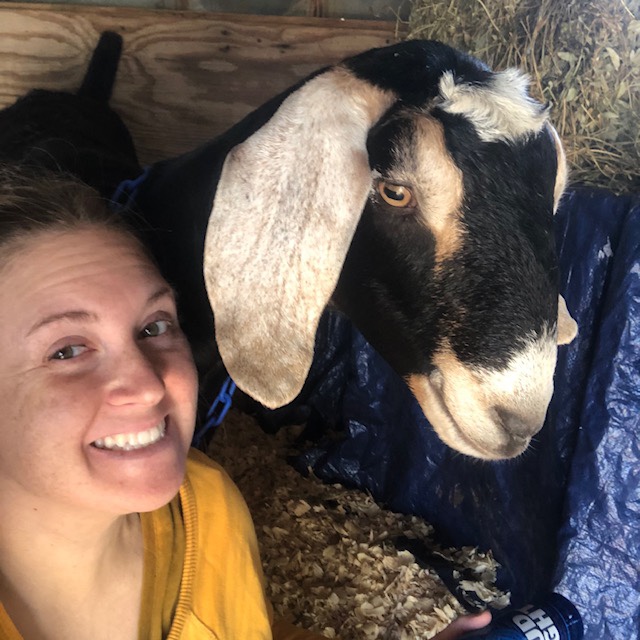
Decide what your purpose is for raising goats. Do you want to raise goats for meat? Do you want dairy goats? Dual purpose? The answers to these questions will help direct your choice.
I wanted dairy goats. I wanted to have fresh milk to drink daily; that was my primary reason. During my research, I found that I can do a whole lot more with milk than just drink it and cook with it, and my desire for dairy goats increased all the more. My secondary reason for dairy goats was soap, which I have since learned to do. I even have my own recipe I’m working on, and I intend to use as much of my own farmgrown ingredients as I can in each batch.
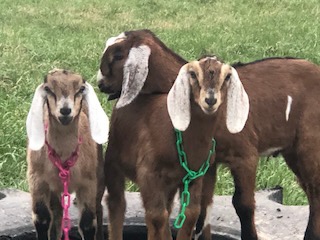
Once you know your purpose for having goats, then you need to ask yourself how big of a goat you want. That comes down to space and feed costs. How much land do you have? How much money are you able and willing to sink into the appetite of your goats? They eat a lot of hay, and at least my goats are incredibly picky about their hay. They won’t eat just anything, though that is a common misconception.
Goats are actually selective browsers, and they really prefer to eat above their knees. They will eat grass if nothing else is available, but they will not eat metal cans. I can promise you that. The larger the goat, the more it’s going to eat. It’s something to keep in mind when doing the math on how much hay to buy for the year and how much that’s going to cost you.
Once you know the purpose of the goat and the size of the goat you want to raise, then you can go about deciding what breed of goat you want. I only have personal experience with Nubians, which is a large breed of goat. There are smaller goats, such as the Nigerian dwarf goat. They produce less milk than a Nubian per day, but it’s said to be good quality. My Nubian named Killdeer, when in milk, produces about a half gallon each day. That’s another thing to consider: how much milk do you want each day? If you want a half gallon or more, you might want to lean toward a large breed. Balance this with the amount of land you have and how much you’re willing to spend on hay.
If you’re thinking that you can’t drink enough milk to keep up with the supply, you can always freeze the milk. That’s what I do, and now I have milk during the winter months when my goat is dry, and we still have goat milk to drink, and I can still make soap.
Another thing to consider is: registered goats, or not? All I can speak to is the security I felt in purchasing registered goats. I found a reputable breeder with registered goats through the American Dairy Goat Association (ADGA), and I asked her every question I could come up with. A good breeder who is worth their reputation is going to be willing to answer all your questions and offer advice on raising goats successfully.
I’m not saying you can’t find a good goat on social media, a search engine, or a cattle auction, but I haven’t gone those routes, so I can’t speak to the success rates through those avenues either. What I can speak to is the quality of the breed I found in finding someone with registered goats. Before buying any goat from anyone, please do your research on the person, the farm, and the goats. Starting with good, healthy stock is going to set you up for more success. And once you’ve started your herd, maintaining a closed herd (meaning you don’t mix and match where you buy from) is what I feel is a good practice for keeping your herd safe from communicable goat diseases.
My Nubians are registered with ADGA, and they all come from lines of show goats. That’s right; these aren’t just *any* goats. They come from ribbon-winning dams and sires; they’re fancy. I say that in jest, because I don’t take my goats to shows, and I have no intention of doing so. I only bought my goats from someone who breeds show goats because I know that she has healthy, quality goats. If she’s willing to put in that kind of time and energy into breeding show-quality goats, then that’s someone I trust to buy farm animals from. And when your goal is to drink the milk of these animals, you want them to be healthy and have the peace of mind they came from an ethical place who puts love and care into the animals.
Registered goats or not, whatever you decide, please make sure the person is breeding, raising, and selling healthy stock. Goats are one of the most fragile animals, and they can die within hours when something is wrong with them if they don’t receive the proper medical care. Starting off with healthy goats is key.
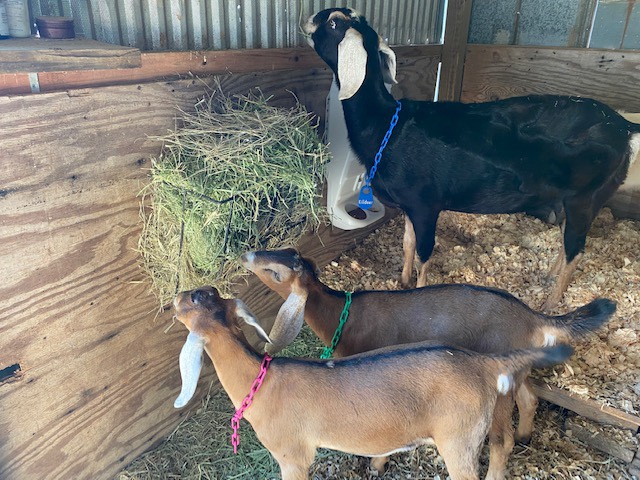
Be prepared to buy more than one goat. Goats are herd animals, meaning they are social creatures. They need friends. I prefer to buy goats in threes, so when looking at costs, make sure you have the ability to invest in starting a small herd.
I bought both does and bucks when I started my herd, with the intent to breed more goats. Whether you want to raise goats for meat or for milk, if you want to be sustainable, you’ve got to have the ability to make more goats. Whereas chickens will lay edible eggs with or without a rooster around, you do need a buck to make goat kids so that the doe will produce milk. If you don’t want to raise bucks, then you’ll need to consider stud costs when it comes time to breed the goats.
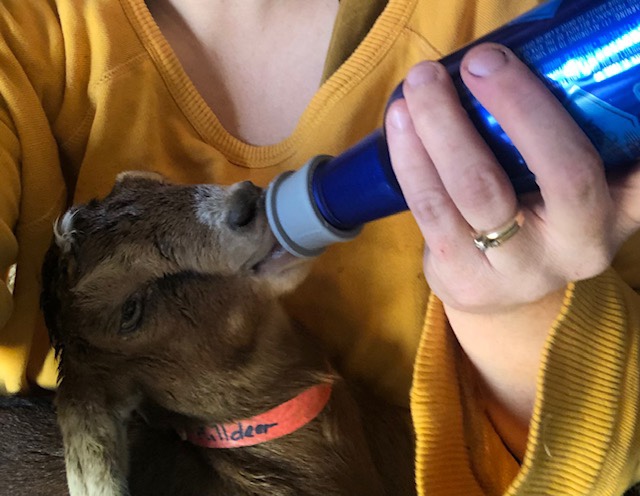
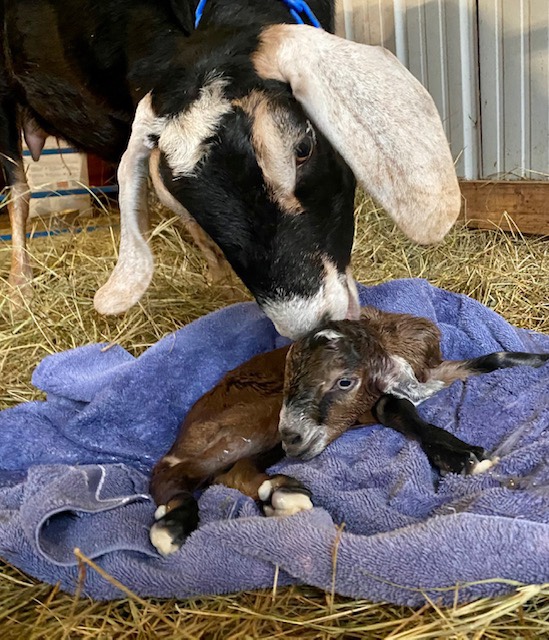
After all my research, I decided on Nubians. They’re the goats with the long, floppy ears. Mine were all bottle-raised because that means the kids get plenty of human contact, which makes them a much more docile, friendly goat. That was important to me because we have kids. I wanted them to be safe around the goats; though, they’re not allowed in the buck pasture alone. Bucks can be feisty, especially when in rut.
There’s an argument to be had about letting the kids be dam-raised, and that argument has to do with not having to bottle feed kids, and letting nature be natural, and I’m not opposed, but a dam-raised goat may be less friendly and more skittish around people. Some diseases that could be present in the doe can be passed to her kids through nursing, so bottle-feeding can help minimize that risk. Just some things to keep in mind. It really just comes down to safety and the amount of risk you’re willing to take.
Safety on the farm leads me to another topic and choice to make: goats with horns, or without? All goats naturally have horns. And if you’re going to have them disbudded, it’s something you need to decide on way ahead of time. It’s a medical procedure, and while it is tricky and dangerous if you don’t know what you’re doing, a goat without horns is a much safer goat to be around, especially when you have children. If you are concerned about the goats’ safety from predators, a livestock guardian dog is something you also need to consider. Again, do your research.
Aside from the safety reasons for my family, my goats, in particular, are disbudded because they come from a long line of show goats. And show goats can’t have horns, as an industry standard. Again, it comes down to safety.
Even if my goats weren’t bred from show goats, I’d have disbudded goats. If a goat bucks up in a weird way while you’re working with it, you can be seriously injured. From personal experience, I can tell you that being hit in the face by a goat’s head is painful enough. You don’t want to add getting gored to the injury is something unexpected happens on the farm. And since I’ve got children, and because I’m often doing farm chores alone, there was just no question for me. Family safety was paramount.
Make sure you have a vet in your area that takes goats as patients, preferably a vet with education and experience in goat care. I’m fortunate to have one just down the road from me, but I can’t stress it enough that you cannot take your sick goat to a regular pet vet. It’s just not going to work out. Find someone who works with and understands goats.
Finally, be prepared for the unexpected, and keep in mind that in raising goats, there is no one-size-fits-all answer. What works for one goat might not work for another. It’s really about learning your goats as individuals and caring for them as each has need.
Research, learn everything you can ahead of them, make plans, and then be ready to change those plans and adjust course. There is great value in book learning ahead of time, but nothing is going to teach you like hands-on experience. But just like a medical student can’t perform surgery until they earn a degree, they still have to graduate before they can get in the OR at all.
There is heartbreak in farming, and nothing can prepare you for it all, but there are also triumphs and wonderful learning experiences. Even the heartbreak brings about hard-earned lessons. They’re all valuable and worthwhile.
If you’re considering buying goats, feel free to reach out. I’ll help answer questions to the best of my ability.
Happy goat herding!
 Blessed Roots Farmstead